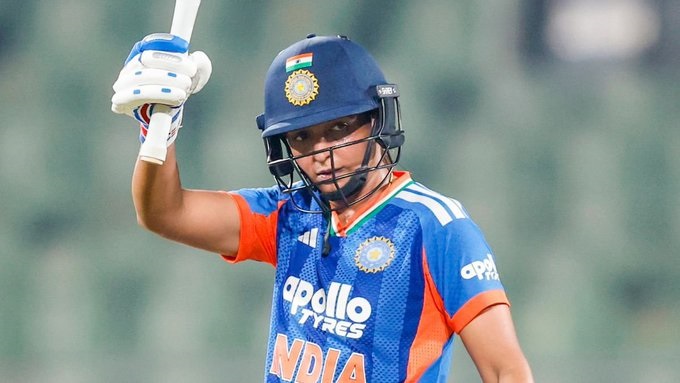
The Indian women's cricket team's campaign in the 2026 Women's T20 World Cup ended in the group stage itself. The team was eliminated after suffering a defeat in the crucial match against Australia. In this game, India had posted a challenging total of 170 for 4. Captain Harmanpreet Kaur herself had put the team in a strong position with a blistering knock of 56 runs off 27 balls. However, in response, Australia chased down the target in the 19th over, powered by half-centuries from Ellyse Perry and Ashleigh Gardner. The anguish expressed by Harmanpreet Kaur following this defeat-and her admission that "a lot needs to change within the team"-sheds light on the current state of Indian women's cricket.
While the Indian women's team has reached the knockout stages of several major tournaments in recent years, the old habit of faltering at crucial moments in finals or high-stakes matches was evident in this World Cup as well. It was clearly visible that the Indian team succumbed to pressure when playing against a formidable side like Australia. Harmanpreet herself admitted that they failed to play their best cricket against top teams. To clinch the title on a grand stage like the World Cup, one must play 'A-grade' cricket not just in the group stage, but in every single match; a consistency that was sorely lacking in the Indian team's performance.
This defeat has once again exposed India's biggest weakness: a poor performance during the 'death overs' (the final overs). Indian bowlers are failing to contain runs in the closing stages of the innings, while the middle and lower-order batters are struggling to accelerate the scoring rate or chase down big targets. Australia easily attacked the Indian bowling in the final overs. Unless India makes radical changes to its death-over bowling and batting strategies, winning a global title will remain difficult.
Although Harmanpreet defended the team's fielding performance in this specific match, the Indian team's fielding and dropped catches have been a cause for concern throughout the tournament. At the international level, every single run and every catch is crucial. Furthermore, Australian bowlers successfully stifled the Indian batters and executed their plans precisely. In contrast, the reality is that Indian bowlers lacked a 'Plan B' to contain the Australian batters.
Exiting the tournament in the group stage-despite securing six points from five matches-is a major setback for Indian women's cricket. By storming into the semi-finals, teams like Australia, South Africa, England, and New Zealand have demonstrated a shift in the benchmarks of modern T20 cricket. If India aims to compete on equal terms with these teams, it cannot rely solely on individual talent. The time has come for the BCCI and the team management to move beyond superficial changes and make tough decisions regarding strategy, player mindset, and team selection. Only if Harmanpreet's call for change is taken seriously can Indian women's cricket emerge from this slump and once again become a strong contender for a global title.